
New book on marriage deliberately ignores gay couples
Are we saving civilization yet? Brad Wilcox’s February 2024 book, ‘Get Married: Why Americans Must Defy the Elites, Forge Strong Families, and Save Civilization.’

‘And you know what that means’
Is it a dogwhistle? I don’t know what it means. Transphobic essays are fiction. Not the harmless entertainment kind, either. These are lies about brutalizing the elderly and medically intervening on kids.
A bigoted premise sparks an ideology
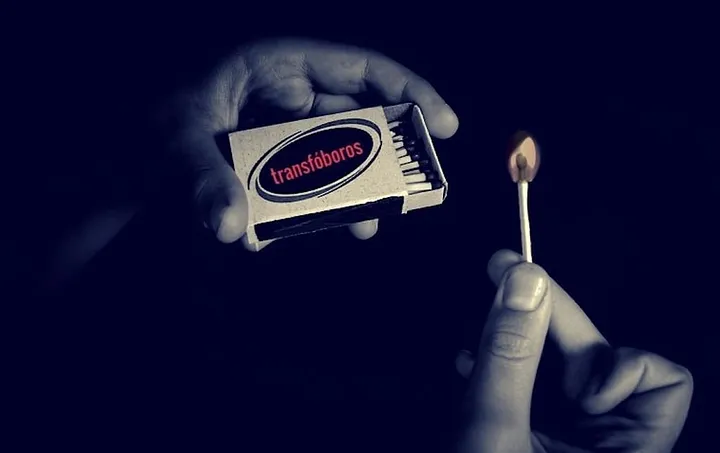
For some, transphobia and homophobia are first principles. Transphobia is an ideology for many, a lens through which they see the world. There are other ways to think without first striking the match of transphobia.
The biggest conspiracy theories are all-consuming
This week’s antisemitism and transphobia—Trump, West, Rowling—is all connected. Donald Trump, Kanye West, J. K. Rowling are billionaires who validate their followers’ hateful conspiracy theories. Antisemitism and transphobia are linked.

Jewish and trans: Conspiracy theories won’t leave us alone
On ‘Jewish Space Lasers’ by Mike Rothschild, with my own reflections on transphobia. No one can prove anything to anyone who isn’t open to real evidence and logic, as conspiracy theorists are not. Still, pay attention to their antisemitism.

How do you know the legislation is anti-LGBTQ without reading it?
2023 was gruesomely challenging. 2024 is something else. You could try to read 20 anti-LGBTQ bills per business day. Or you could just recognize that this massive legislative campaign is anti-LGBTQ and harmful.

How many anti-trans laws were proposed last week?
They‘ve been counted, but let’s also reflect on what they mean. We all need to be amplifying the news and the message. Support the trans people and cis allies who are doing the work.

Yet 10 *more* ways trans people are told we shouldn’t exist
Now my list is up to 30. More than one transphobe engages with these ideas. If you read them, you’ll feel the force of the repetition. The message: Trans people shouldn’t exist.
10 *more* ways trans people are told we shouldn’t exist
Truly, there are a lot of ways. Here are items 11–20. Trans people have a relevant perspective here. When we hear anti-transgender statements, we know that the true meaning is ‘trans people shouldn’t exist’.