
Why did Richard Dawkins tweet about Rachel Dolezal?
Some people did not recognize the reference. Here’s a quick refresher. An organization stripped Richard Dawkins of an award given to him 25 years previously because (in part) he trolled people about race and gender in a tweet.

‘We are in trouble,’ but not for the reason you think
Douglas Murray defends prejudice in ‘The Madness of Crowds’. If he were inclined to support trans people, he wouldn’t find basic affirmation ‘the hardest part.’ He wouldn’t say we need to argue more.
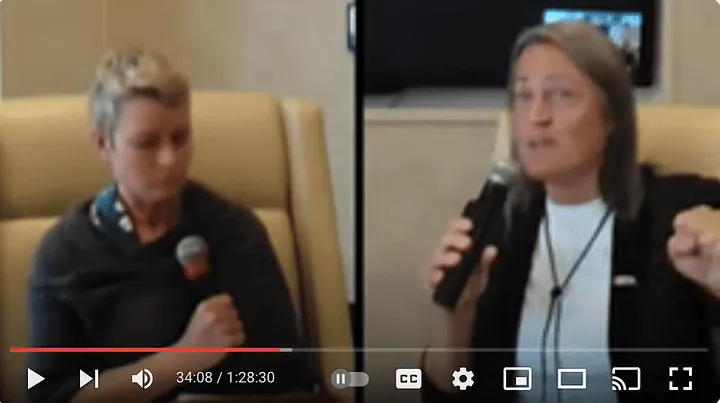
If we have a fundamental moral disagreement, why are we still talking?
Holly Lawford-Smith shows up for the self-appointed ‘heterodoxy’ at Colorado State University. The Heterodox Academy supports ‘gender-critical feminism,’ whose entire purpose is to exclude trans women and misrepresent trans men.

Toward a better epistemology: Why do we care about what we know?
A reaction to the ‘Gettier problem’. Maybe there isn’t just one definition of knowledge. Maybe every type of knowledge is related in a “family resemblance.” Some are propositions. Some aren’t.
The feeling of knowing
Steven Connor’s 2019 book ‘The Madness of Knowledge’. ‘Epistemopathy’ means the feeling of knowing. We have pleasant and unpleasant feelings associated with knowing. That’s part of why knowledge matters to us.

Turtles all the way down
Finding truth in emptiness. When we acknowledge there is no final turtle, we open ourselves to discover and live more. The turtle on which we are standing is never the last one.

We can’t prepare for this moment
‘Opening to Darkness’ by Zenju Earthlyn Manuel. What to make of this political and ecological moment, this chaos that arrives with no instructions? We can “see, collectively, in the dark.”

‘Do I want it? Life, that is.’
‘On Not Knowing‘ by Emily Ogden. What is there to hope for? Should we hope? We can work in the field, making bales of hay, but the work of the soul “never will be cut and dried.”

‘Agnotology’: The study of ignorance
Our ways of knowing can be corrupted. “We’re going to have to rethink our metaphors,” Proctor said, on persuading people away from science-denial. “We’ve got to think much more creatively.”